Automation Starts with Processes, Not Robots

Aimtec
24. 9. 2026
5 minutes reading
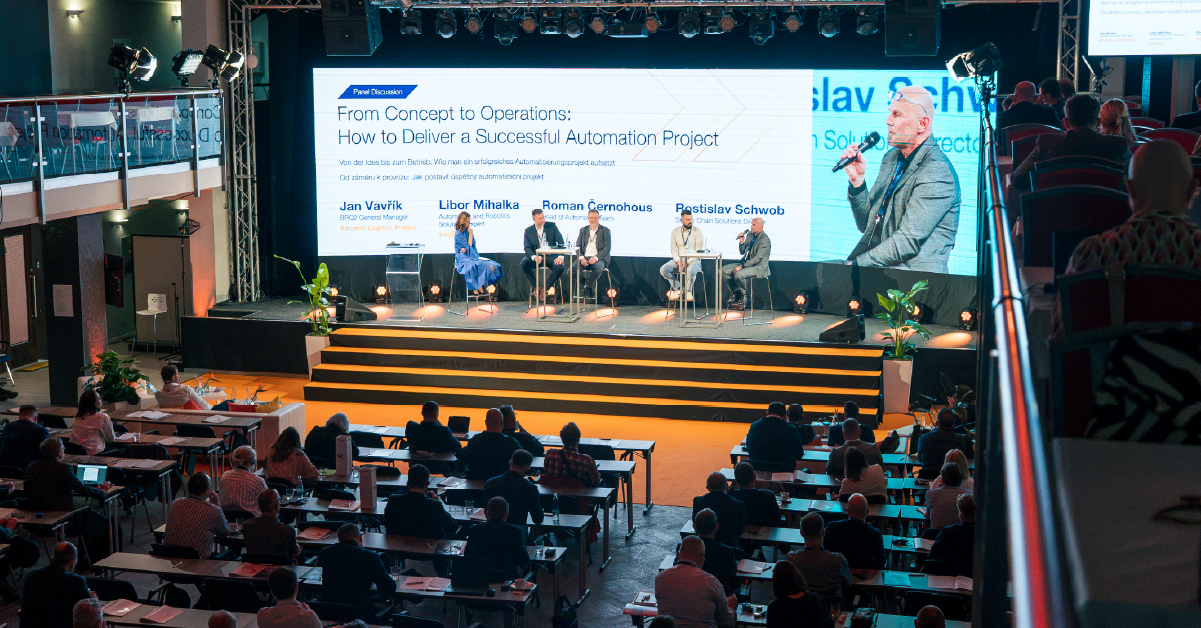
An automation project’s success is built on more than just your choice of technologies. Above all, it’s built on good data, well-configured processes and a realistic plan. How can you integrate simulations, digitalisation and AI so that your investment weathers changeable operations? Jan Vavřík from Amazon, Rostislav Schwob from Aimtec, Roman Černohous from Logio and Libor Mihalka from LogTech shared their experience at June’s TAL 2026 conference.
Data and goals first, technology second
Automation can bring you higher performance, better quality and safer work. But it doesn’t guarantee success on its own. The panellists were united on one key point: before choosing technology, companies must know what problem they’re addressing and why. “You really have to get right to the process and stand there at the process table,” said Amazon’s Jan Vavřík. He explained that you have to analyse defects, gather data, assess what the operation can support and create a business case. There must be a clear goal known in advance, such as improving productivity or increasing quality.
Just trying to keep up with the competition isn’t enough. Roman Černohous from Logio says companies should first define their future operations – not simply assume they need automation. Especially when they’re automating a broken process: then technology just expands the problem. “If I’ve got chaos in my operation and I bring automation or mechanisation into that chaos, all I’ll get is automated chaos,” Vavřík summed up.
If I’ve got chaos in my operation and I bring automation or mechanisation into that chaos, all I’ll get is automated chaos.
Flexibility comes first
Automation has to be able to respond to changes. That’s crucial – especially in a world of changing product mixes, customer demands and seasonality. Aimtec’s Rostislav Schwob says maximum flexibility and agility are the top priorities for logistics in the years ahead. So this is where mobile robots (AMRs) come into their own: they are easier to move and scale than fixed automation. But not even they are a panacea. One project showed that a robot dispatched only once a pallet is complete will always arrive too late. If the system can predict when a pallet will be ready, the robot can move earlier. “It makes sense to combine prediction and robots,” Schwob explained.
But flexibility is still limited by physical constraints. Libor Mihalka from LogTech noted that a single system can’t handle both small phones and large appliances equally well. That means you need to choose technology with an eye to product mix, performance and future expansion.
Simulations help verify reality
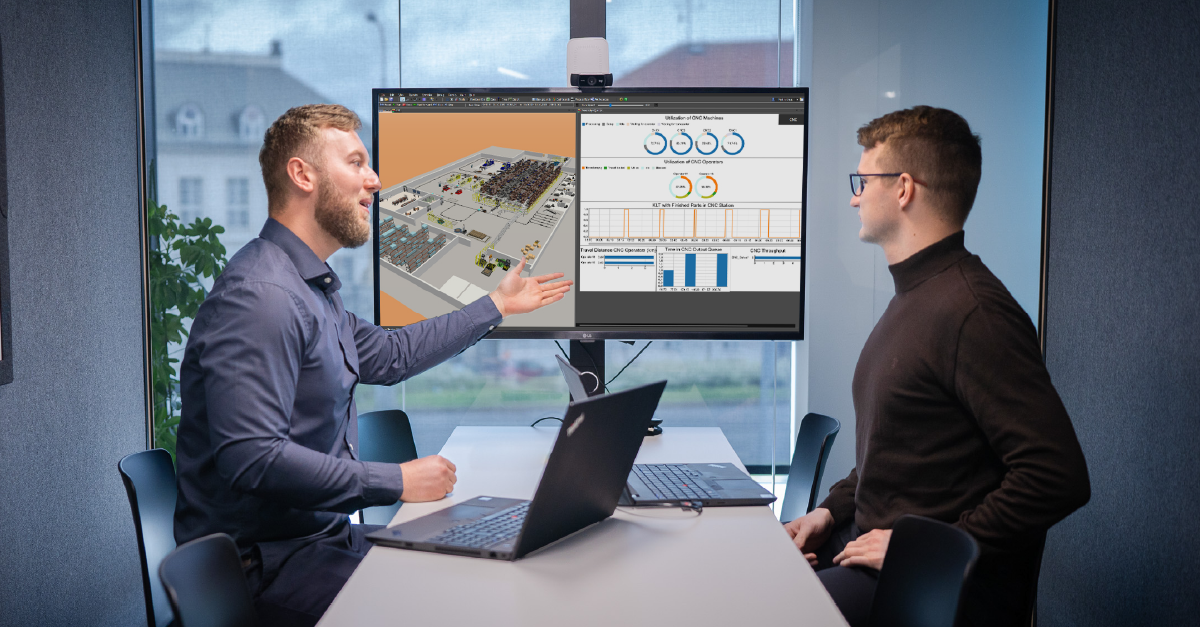
And this is where simulations come in. If a company knows its volumes, peak production periods, distances, speeds and safety rules, it can use a 3D model to verify how much equipment it will need and the performance it can realistically achieve. “You’ll get a model that tells you first whether it’s doable and second what performance you can expect,” Schwob explained. Simulations can’t replace decisions, but they do reduce the risk of a company investing in a solution that only works on paper. They’re especially important wherever layout, processes and technology are all changing at once.
AI needs a firm foundation
Automation can’t reach its potential without digitalisation. Robots, conveyors and other equipment have to be controlled by software that works with orders, priorities and the current situation on the ground. “Today digitalisation is the foundation at every step,” Vavřík said. At the same time, automation projects are first and foremost change projects. Besides technology, a company needs to deal with migration, training, system handover and later support. Libor Mihalka pointed out that the client team often handles day-to-day operations alongside implementation, which can hold a project back or leave its key staff burnt out.
AI can only bring another level of optimisation and prediction when the process has been standardised and the company is working with the right data. “If I apply it to something that isn’t working properly, well, I can actually make the process worse,” Vavřík warned.
What to do and what to avoid
Don’t make rushed decisions or buy solutions just because they seem attractive. “I wouldn’t invest in something where I’m not entirely sure it will solve my problem,” Vavřík recommends. Mihalka added that a project needs at least a basic level of analysis, documentation and understanding before bids can be compared. And what should you do? Have a clear plan, use good data, bring in the people who will be running the system early and treat automation as a long-term commitment. As Černohous points out, “this is a marriage for many years.”

Get top stories from logistics, production and IT.
By registering, you agree to the processing of your personal data by Aimtec as described in the Privacy policy.
Related stories