
Aimtec DCIx

System sustainability, availability and AI – where to focus development for long-term value
Seven years ago, Jan Kocián joined us as the head of product development for Aimtec DCIx. Ever since, he’s been focused on managing this digitalisation platform’s development team, developing it and improving its features and technology. He says much has changed today: the solution has seen a major transformation, its team has doubled, and performance, security and flexibility demands keep on growing. We chatted about how the development approach has changed, why system sustainability and effective cloud management matter, and some ways to leverage AI in logistics and manufacturing.
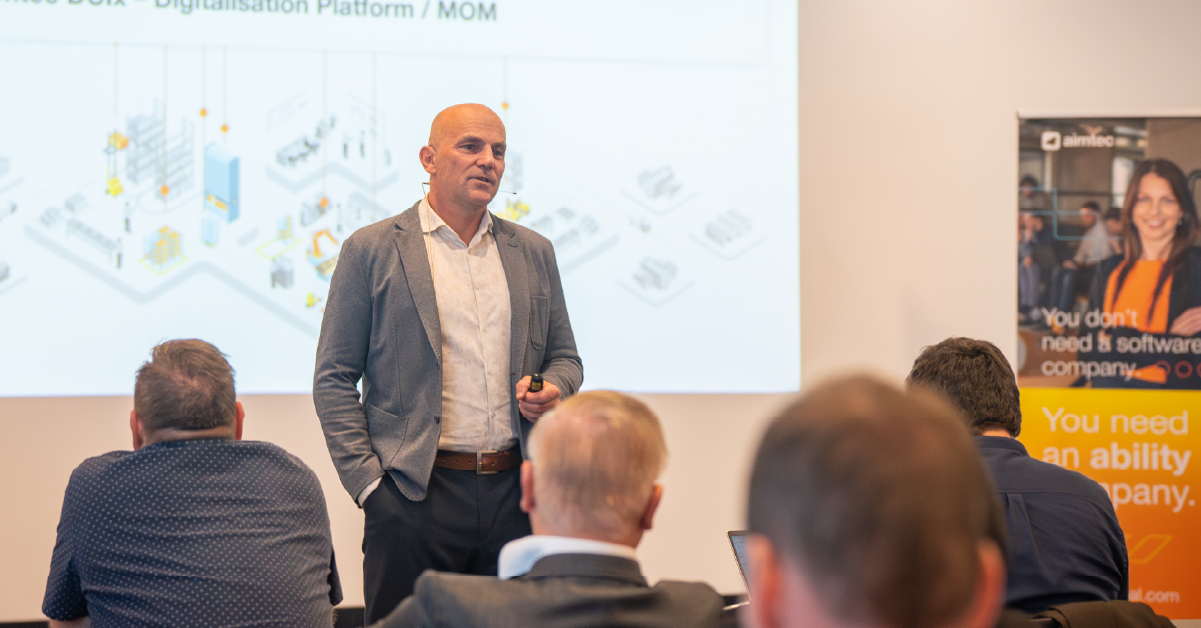
What visions and news did this autumn’s Aimtec DCIx User Group meeting bring?
The regular meeting in Pilsen for users of Aimtec’s DCIx solution took place at the end of October. Participants learned Aimtec’s visions in logistics and manufacturing, the latest features the system has to offer, what plans are in store for future versions and more. Case studies from two companies, DŘEVO TRUST and DENSO MANUFACTURING CZECH, were on the agenda as well. Participants also showed great interest in the morning workshops on current topics, such as logistics automation and the application of AI, comprehensively interconnected and managed manufacturing, and enterprise digitalisation. Couldn’t make it to the meeting and missed the latest news, or want to go back over some of the presentations? Watch the videos from the main afternoon segment.

BI reporting brings full data automation, says Futaba Czech’s Radek Slanař
Futaba Czech manufactures steel components for cars. Its Czech plant in Havlíčkův Brod was built to serve as Futaba’s sole location in continental Europe – a role it still retains today. It is also highly valued from this Japanese industrial group’s standpoint because it strives for constant progress in operational management, which oversees logistics, manufacturing, maintenance and more. To achieve defined KPIs and provide precise and timely KPI reporting to its parent company, the plant recently switched to reporting its indicators with the help of BI. What fuelled the plant’s decision, what will the new tool bring it and what are its further visions? We spoke on all this and more with Radek Slanař, this Czech enterprise’s plant manager.

Rostislav Schwob: The Latest Aimtec DCIx Version Makes Connected Manufacturing and AI/ML a Reality
The world around us is constantly accelerating and globalising. That means growing competition, and companies are pushed into ever greater and more frequent changes. New technologies are rushing at them from all sides. It seems like just about everything can be automated now, and everything can control itself with help from digitalisation and artificial intelligence. How can the Aimtec DCIx digitalisation platform help companies with this? And what will our October seminar for customers be showing them? We came with these questions to the person best placed to answer them: Aimtec’s Supply Chain Solutions Director Rostislav Schwob.

Efficient in the Dark: The Five Phases on the Way to a Dark Warehouse
Fully automated warehouses – dark warehouses – aren’t just science fiction anymore. They’re coming to the forefront in the real world. They operate without human intervention and in the dark, because their robots and machines can work without light, and their processes run based on system commands. What are the ideal steps and paths on the way to a dark warehouse? Can digital twins help with deploying these warehouses?

Efficient in the Dark: The Dark Warehouse as the Future of Warehouse Logistics
Warehouse logistics is always a challenge for manufacturers. The movements of a large quantity of products offer significant optimisation potential, but they also mean many potential points of failure. Fully automated warehouses, also known as ’dark warehouses’, are often seen as the ideal solution to every problem. What makes them better than regular warehouses, and what makes them different?
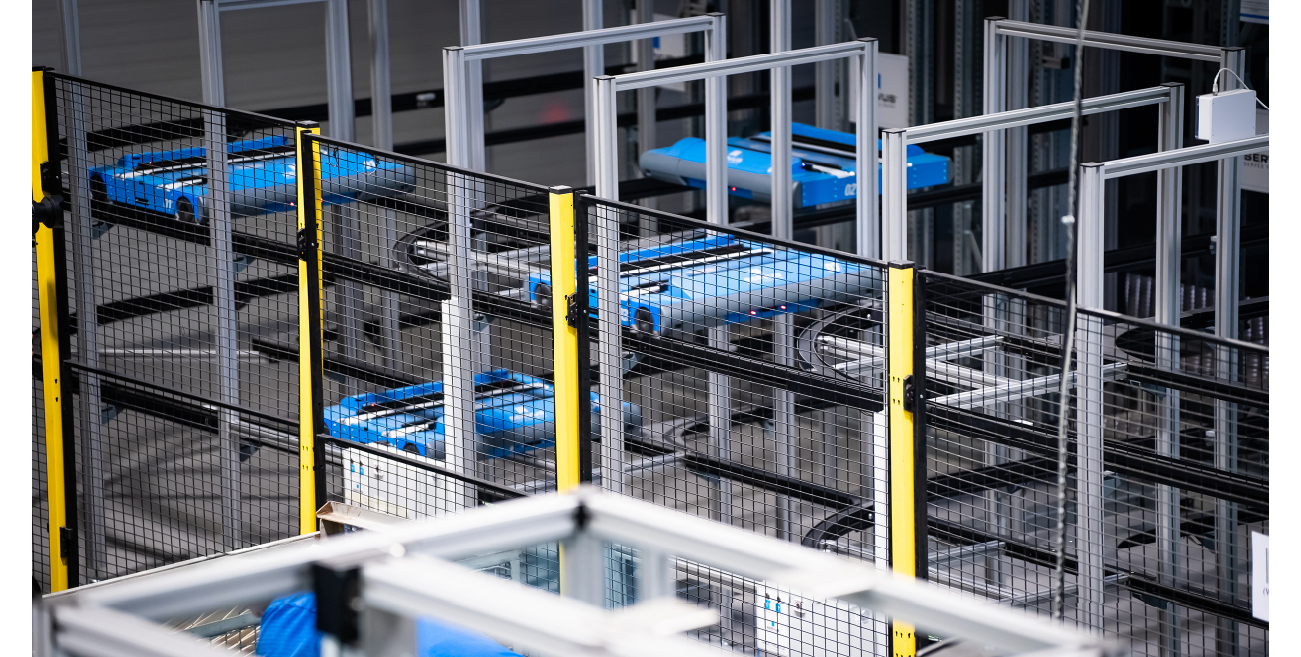
Scherdel - Flexibility as a key goal of automation
Inhouse logistics starts to be a difficult issue from companies of medium size. One such company is SCHERDEL, whose Czech division has embarked on a project to automate and digitalize logistics, specifically by implementing a fully automated warehouse full of self-driving robots. During the work, the entire concept changed several times, because one of the key conditions of the whole solution was flexibility, which is not easy to provide through automation. The experience of building an automated warehouse was submitted by the company's managers in a presentation at the TAL 2023 conference.
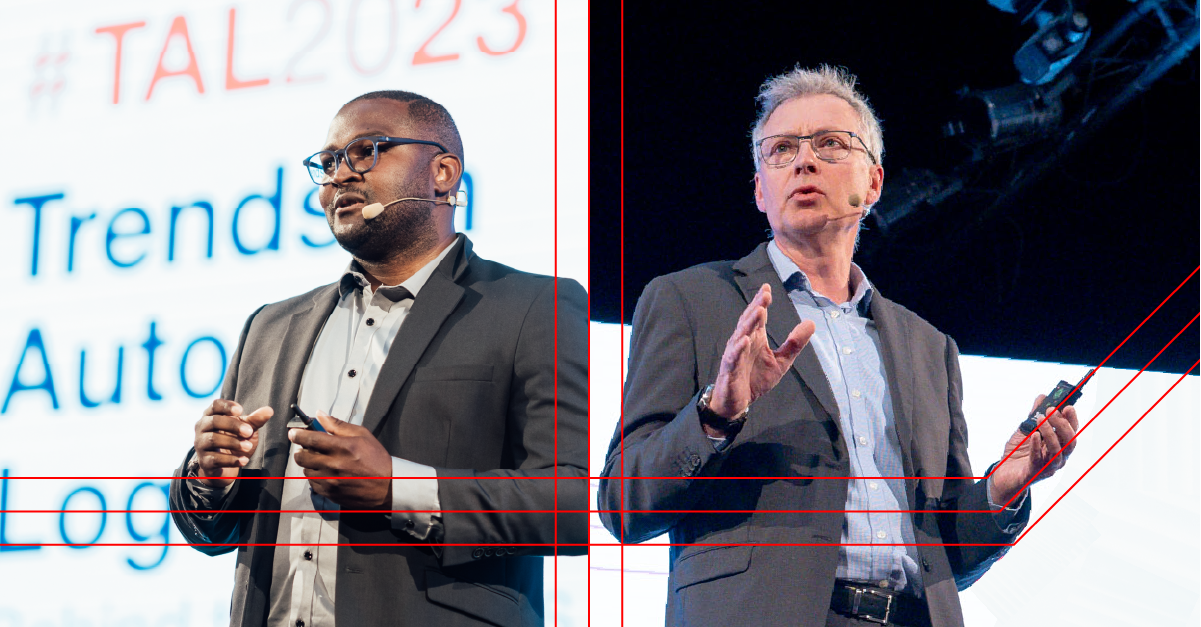
TAL 2023: What Safran's digital transformation looks like
The purpose of any change in company operation should be to improve, whether in terms of efficiency, cost or workflow. Ideally this is an upgrade that brings positive benefits in all areas. This may not be easy for large companies operating in different industries. At technology company Safran, they have done just that, relying on four key pillars of digital transformation, as explained by executives Frédéric Vétil and Bindioa Ouali at the TAL 2023 conference.

Automation diminishes flexibility. Aimtec’s Rostislav Schwob explains how to restore it.
A full 95% of the firms approached in the Trends in Czech Logistics 2022 study stated that they plan to automate and acquire more modern machinery within five years. Meanwhile, new technologies, sensors and approaches to managing large datasets are being developed constantly. New orders often bring changes to the processes and conditions inside a company. Many interconnections are formed in the midst of all this, which necessitates changing and developing a firm’s overall control logic. How should you approach these demands? Is it even possible to connect it all, manage it digitally from one place and have a single, functional digital world? We asked Rostislav Schwob, Supply Chain Solutions Director at Aimtec.

Automation Remains Main Trend in Czech Logistics Even in Times of Expected Crisis
What does the present and future of Czech logistics look like? Where are investments going? To what extent is the storage and logistics sector affected by the post-COVID situation and the war in Ukraine? These and other questions were answered in the unique Trends in Czech Logistics 2022 survey conducted by Ipsos for the SKLAD trade association, of which Aimtec is a member. 132 companies took part in the survey and the responses by their managers show an emphasis on deepening digitalization and optimization of logistics processes and warehousing.

Data. Data. And more data! How can you master it and ensure it’s clear and on time?
In manufacturing and logistics, you’re faced with mountains of data, and you need to master those mountains. It would be a shame not to use them. But how should you work with them and display them to ensure that they’re truly of value and that you can make good and informed decisions? How can you gain the information you need in just a few clicks – and in an an easily navigable form? Get to know the different types of reports that can help you.
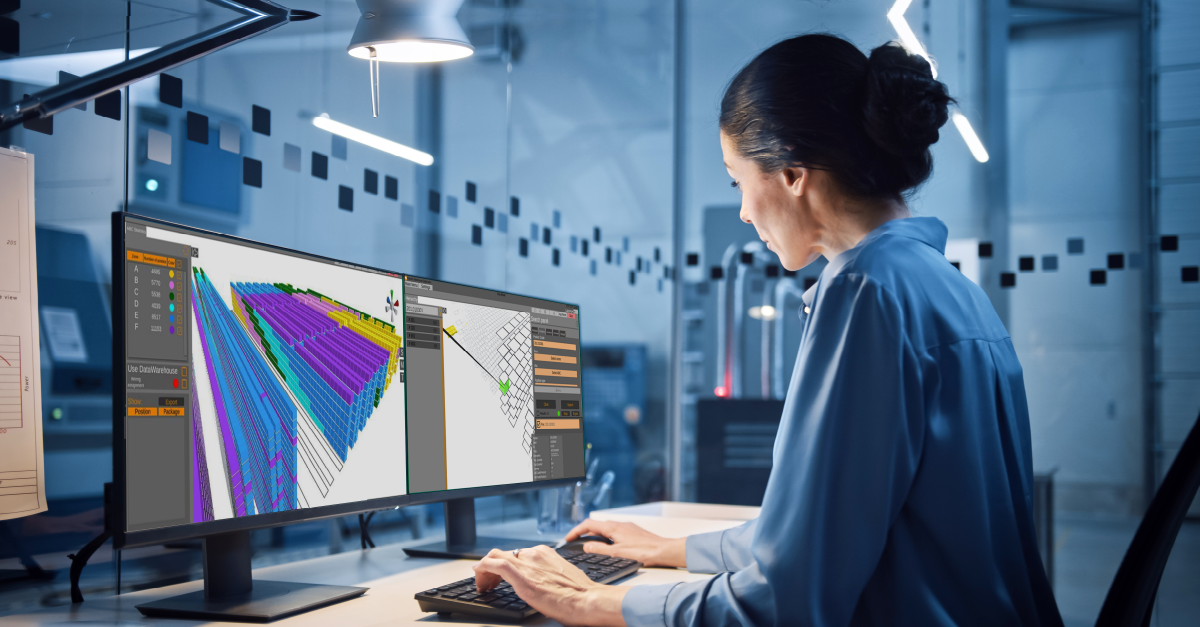
Reporting, digitization and 3D visualization streamlines logistics processes by tens of percent
The complexity of today's industrial production brings manufacturing companies a huge amount of data that needs to be processed and then used efficiently. One example of such use of reporting data in manufacturing logistics is the data warehouse and the application of the digital twin of the physical warehouse, i.e. its 3D visualization. Aimtec supplied just such a solution to Continental's domestic division. Thanks to this it has reduced the work of warehouse stackers with high-volume material to a third and gained a perfect overview of in-house logistics, which will also facilitate crucial strategic decisions.

Digitalisation brings new perspectives on manufacturing efficiency
A register of scrap and manufactured units, operator and machine downtime tracking… approaches like these have become a standard part of production monitoring and reporting. In our digital age, can monitoring of overall equipment effectiveness (OEE) in terms of availability, performance and quality be improved even further, and can the needed data be acquired even more quickly and easily? What’s changing in this area, what new features is digitalisation bringing, and can we expect any specific tangible results?

Digitalisation platforms – an inexhaustible tool for manufacturing optimisation
Have you ever had the feeling that your manufacturing can’t be optimised any further, and you’ve reached its limits? Is it at all realistic to have completely interconnected manufacturing, in which people, machines, tools, materials and products all communicate simultaneously? The solution is a digitalisation platform that is able to connect to anything you can think of. With its help, you can configure any behaviour you desire for individual outputs and set up a variety of possible reactions. This way you can have complete information from manufacturing in real time – and digitally control it as well.
How to standardise processes in the automotive industry without limiting its flexibility?
How does a global automotive player use Aimtec’s DCIx System to standardise processes in its plants and facilities? Get an insight into International Automotive Components Group (IAC) straight from their European Vice President of IT and Systems Tolga Özkundakci.