
Migrating to SAP S/4HANA: Harness the potential of EDI for supply chain optimisation


Aimtec
16. 5. 2024
3 minutes reading
SAP is one of the world’s most widely used ERP systems today, and its first version dates all the way back to the 1970s. The business world has changed dynamically since that era, and these changes have made it essential for companies to have an ever more complex and robust information infrastructure to support their digitalisation and automation. In 2015, this led SAP to come forward with a breakthrough solution: SAP S/4HANA. It represents a technological leap towards greater speed and stability and a modern user interface. But, above all, it’s ready to support companies as they go about transforming their business, integrating new technologies, plugging in AI, working with data and more.
The migration challenge
As we draw closer to 2027 – when support for older versions of SAP will be terminated – many businesses stand before the challenge of migrating to the new version. This transition period is an ideal chance for companies to review and optimise their internal processes. That’s because it’s important for them to consider whether it’s more expedient to convert their current system, or whether overall reimplementation is the more effective approach. Tools such as SAP Readiness Check can help companies to assess their technical readiness and compatibility with SAP S/4HANA. However, we also recommend that they put some thought into how their current system supports their physical processes and long-term business needs.
EDI integration as the key to efficiency
In our experience, one smart thing to focus on during a SAP migration is the area of electronic data interchange (EDI) – exchanging data with customers and suppliers – and, more broadly, supply chain digitalisation overall. EDI is essential in order for the supply chain to function effectively, especially in automotive, where it supports flexibility and lean process management. Timely and precise data is key for dynamic inventory management and a smooth flow of materials. When an enterprise maximises its use of EDI, this leads it towards greater transparency and automation, enabling it to respond quickly to changes and prevent errors.
For companies that have yet to migrate to SAP S/4HANA, now is the ideal time to consider how EDI can improve their overall supply chain optimisation strategy.

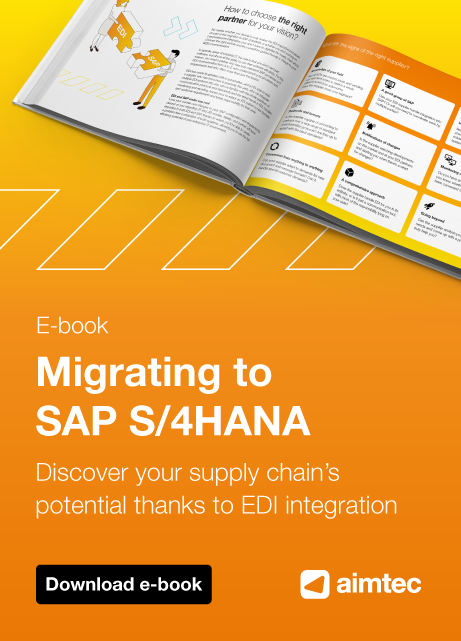
Would you like to learn more about the different possible levels of supply chain digitalisation and see if you’re missing out on opportunities to make your business more efficient? Download our e-book , where you’ll find detailed information on integrating EDI during your SAP S/4HANA migration and discover new possibilities for your company.

Get top stories from logistics, production and IT.
By registering, you agree to the processing of your personal data by Aimtec as described in the Privacy policy.
Related stories
An Interview with Hana Součková (SAP) and Jan Kratochvil (Aimtec): AI is giving firms room for decisions with more added value

An Interview with Hana Součková (SAP) and Jan Kratochvil (Aimtec): The Cloud Is Changing the Rules