An Interview with Martin Kraus: “Simulations Help Us Be Confident We’re Making Good Decisions”


Aimtec
5. 2. 2026
5 minutes reading
Making decisions about production or logistics changes is always risky. Every step – changing a layout, adding a shift or investing in automation – can transform the whole system’s performance. How can you evade mistakes and decide with confidence? We chatted about all this with Martin Kraus, a simulation specialist at Aimtec.
Martin, what should people think of when they hear the term “process simulation”?
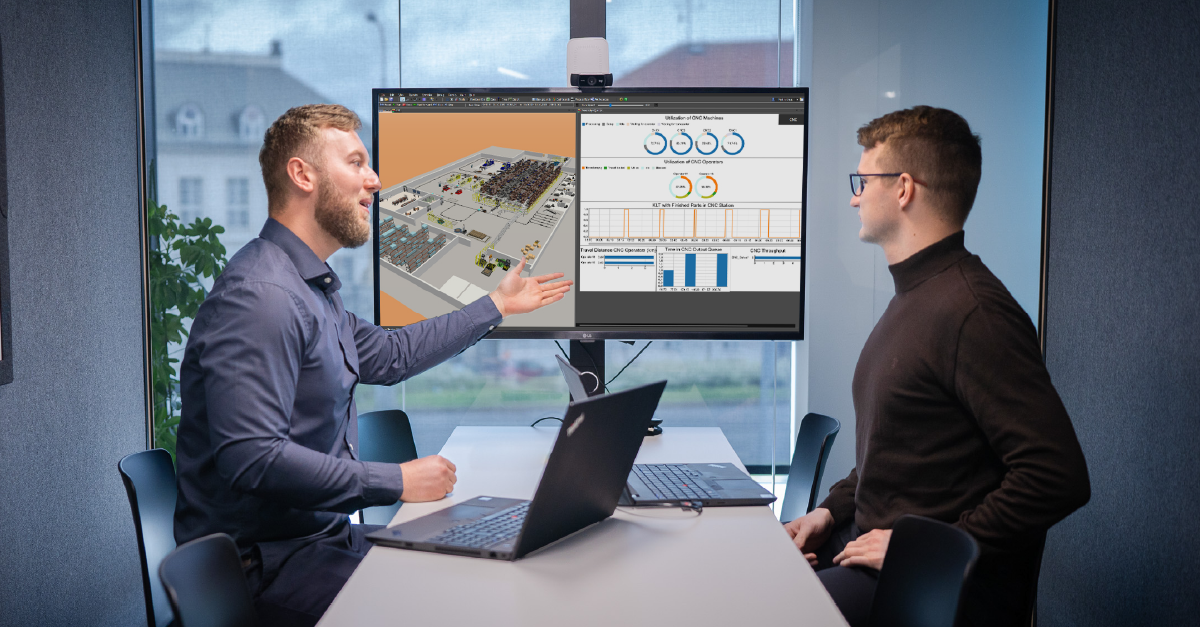
Using FlexSim we essentially build a “virtual factory,” where we can try out various scenarios risk-free with an unlimited number of runs. We watch how the system would respond if we changed the warehouse layout, added a shift, increased production, or adjusted transport routes.
Simulation enables us to test ideas in a safe environment – without halting production and without expenses. It’s a space where you can think, experiment and seek optimal solutions before starting the actual change.
What do you see as simulation’s biggest benefit?
Simulation lets companies respond to changes in advance and make decisions based on numbers, not gut feelings. With the model, they see where bottlenecks occur, the effects changes will have and whether the investment is truly worthwhile.
So they move on from intuition to a systematic approach based on hard data.
Do you have a concrete practical example where simulation has helped?
The model revealed that the bottleneck was manual depalletisation and transfer onto forklift trucks. Even under normal conditions, these processes were running close to capacity.
Without simulation, the problem would only surface once production increased and the system started losing pace. The simulation let the company find its weak spot in advance and adjust the process to handle higher throughput without overloading people or machines.
So simulation can prevent unnecessary investments too?
Before the company committed millions of crowns to its deployment, we created a simulation model that showed exactly how the system would function. The results confirmed the investment would be worthwhile, but they also showed the throughput could be further increased by adding ABC analysis and optimising the access aisles.
With concrete data and arguments, management could make decisions confident that the investment would pay back.
How do simulations change the way teams think about processes??
People see the same situation – material movements, times, load levels, queues – and suddenly speak about the facts. That helps unify views across the company.
The analysts understand the data, the operators know the real situation, management has a strategic overview – and the simulation connects them. At that moment, the simulation stops being just a technical tool and becomes a collaboration tool.
Simulation enables us to test ideas in a safe environment – without halting production and without expenses. It’s a space where you can think, experiment and seek optimal solutions before starting the actual change.
How does simulation fit within the broader digitalisation of production?
When something changes – maybe demand or labour availability – the model can take that into account and help you find the best response.
This lets a company test a decision’s effects even before they appear in reality. This brings a huge benefit at a time when even a tiny mistake can quickly be multiplied.
And how would you describe the benefit of simulation in your own words??
Instead of relying on estimates, we have hard data supported by visualisation – whether we’re dealing with layout changes, operator numbers or warehousing strategies. We can clearly see what will work and where problems might turn up. It’s an invaluable tool for anyone who needs to make smart and timely decisions rather than relying on guesswork.”
Did this catch your interest? Contact an expert
Václav Kalina
Business Consultant Production Planning Solutions
Contact

Get top stories from logistics, production and IT.
By registering, you agree to the processing of your personal data by Aimtec as described in the Privacy policy.
Related stories
Optimisation based on your goals? Your plant offers thousands of options. A solver finds the best.